|
|
|
|||
|
|
WEEKLY STATISTICS FOR OUR NO-LOAD MUTUAL FUND INVESTMENT PLANS As of By Ulli G. Niemann |
|
|
|
|
IN THIS ISSUE: 1. Domestic Equity
Mutual Funds — BUY 2. Exchange Traded
Funds (ETFs) — BUY 3. International
Equity Mutual Funds — BUY 4a. A Global
Perspective 4b. Special
Situation Funds 5. On the Horizon:
Bear 6. 401(k) Funds — BUY 7. New Subscriber
Info Weekly In a
repeat performance from last week, the market had 2 down days and 1 up day thereby
continuing to ride the negative sentiment which has prevailed on Wall Street
this year. There is not much we can do other than to monitor our positions
and watch our sell levels. Our exit
points are as follows: We will sell any mutual fund which declines more than
7% from its Buy cycle high. It is of vital importance to follow this ‘Sell
Stop’ since no one knows if this is the beginning of a new bull market or
simply a hiccup in an ongoing bear market. TIP: To export the momentum tables to
your spreadsheet, please click on the link below and you’ll be able to copy
and paste: http://www.successful-investment.com/StatSheet/SSTables012005.htm 1. DOMESTIC EQUITY MUTUAL FUNDS: BUY — since
Last Buy Cycle from
*Our
average portfolio (over $50k) has returned +24.81%, after management fees,
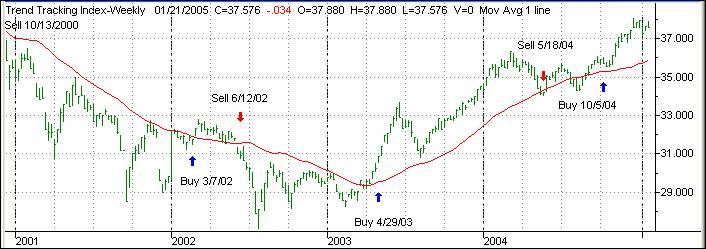
for the Buy Cycle (from Our TTI
pulled back from last year’s highs and currently sits +4.99% (last week +4.85%)
above its long-term trend line. Our exit point has been adjusted, and we will
sell any fund which drops more than 7% from its high, or we will sell all if
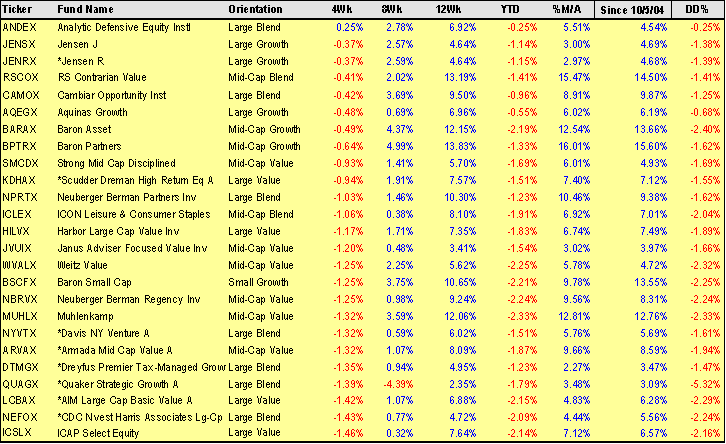
our TTI breaks below its long-term trend line, whichever occurs first. The first
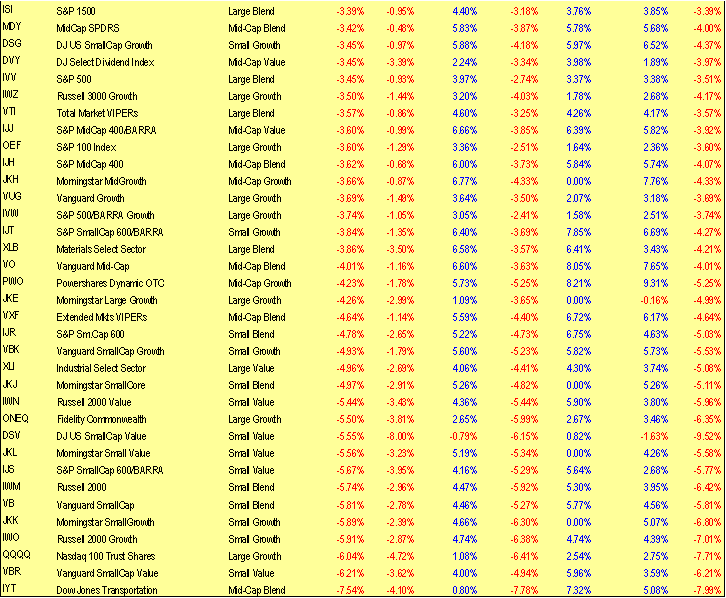
table below shows the top 25 funds (out of 834) and is sorted by 4Wk
performance (as of To level
the playing field, please note that I have removed all leveraged funds from
these listings. Please note, that I only track
no-load, no transaction fee or ‘load waived’ funds, which are available to me
through my custodian I have identified those
funds, which are available to me as “load waived” funds or “advisor only”
funds, with an asterisk before their names. While this may not apply to all
brokerage firms, it should allow you to quickly locate those which are truly
no load.
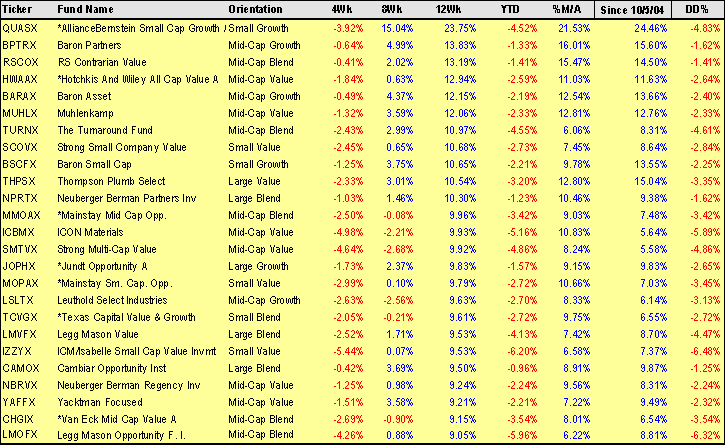
The
following list shows the top 25 funds out of the 834 we track, but the
sorting order is by 12wk performance:
In the
following table, the data has been filtered as follows: I have
expanded this list to feature the top 50 funds with positive numbers in all
momentum columns and a DrawDown feature of less than 5% (DD%). The sorting
order is by 4 weeks. The
result is that only those funds with consistent performance in all areas are
displayed, which to me represent the top choices for fund selections. There are no
funds listed this week due to the YTD figures (first 8 days) being negative! TIP: Don’t forget to check the 401k
funds in section 6 as well, since many of them are available for all types of
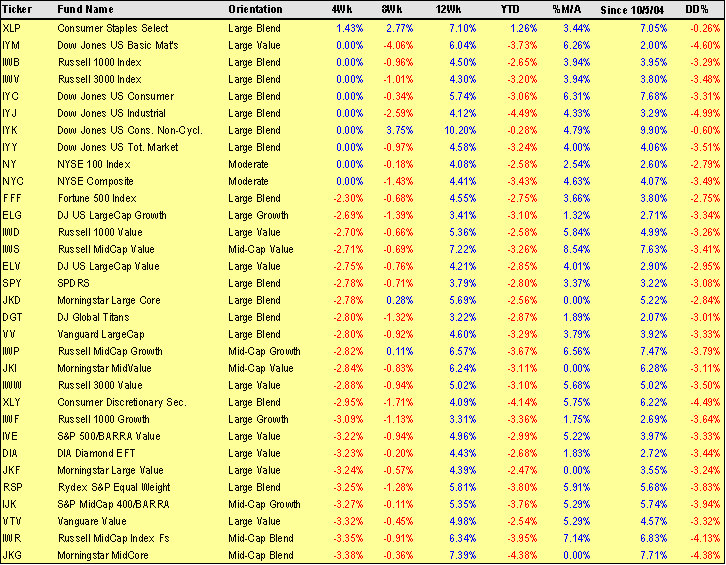
investment accounts at different brokerage houses. This list is being
enlarged constantly as subscribers submit fund selections. 2. EXCHANGE TRADED FUNDS (ETFs) ETFs are
an excellent alternative to No Load Mutual Funds. They are a valid choice to
high mutual fund management fees and redemption charges, which have plagued
us all for years. If you’re
not sure how to use ETFs please read my FREE article about their pros and
cons, which you may view anytime at: http://www.successful-investment.com/articles24.htm All the
same Buy and Sell rules apply for ETFs as they do for domestic equity mutual funds in section 1.
3. INTERNATIONAL EQUITY MUTUAL
FUNDS: BUY —
since
Last Buy Cycle
from
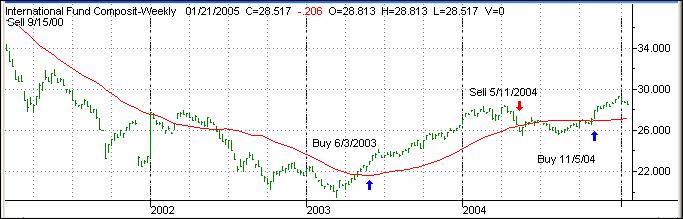
Our
International Index moved lower this week and is now sitting +5.15% above its
trend line. We did commit 1/3 of our portfolios to this market on These
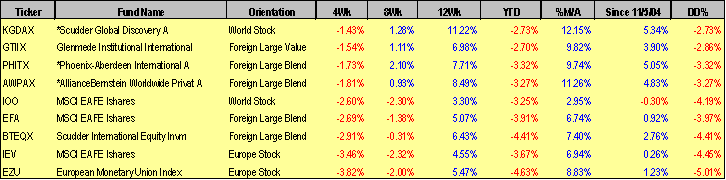
represent some of the top performing international funds (out of 95) sorted
by 4wk performance as of
Please be
advised that many international funds may not be available to you since they
carry a load. However, while I am able to purchase these for my managed
account clients as ‘load waived’ funds, this doesn’t help you much, if you do
your own investing. This is why I have included the appropriate ETFs in the
above list. 4a. A GLOBAL PERSPECTIVE: While I
believe that the I am
pleased to bring you this addition to my newsletter, which will allow us to
also invest selectively in countries with better performing stock markets.
With the proliferation of ETFs over the past years, we will be able to invest
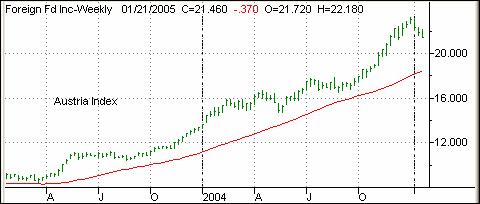
in a variety of countries using low cost index ETFs. The chart
shows the Austria Index as an example.
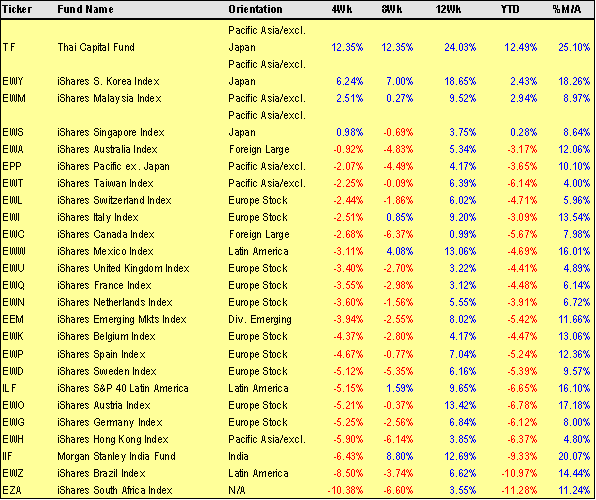
Below is
a list of 25 countries, which I will be tracking from now on. With the
S&P 500 showing a meager 2004 return, it’s easy to see why this is such a
great opportunity. Most
countries have outperformed the
Here’s
how I have used these country ETFs so far. Having invested about 55% of my
portfolio in domestic equity funds and 33% in international funds, I have
allocated the balance and purchased various country ETFs. Since I want to
give them enough “room to move,” I will use a 10% stop loss rather then the
usual 7%. I am now
100% invested and will hold my positions. 4b. SPECIAL SITUATION FUNDS Many
investors would like to participate in the current gold rally as well as the
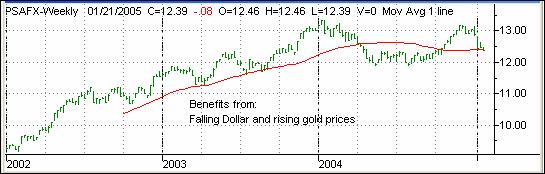
decline of the dollar. The Prudent Safe Harbor Fund (PSAFX) lets you do both
at the same time in a very conservative manner. As you can see from the chart
below, while this fund still sits 2.16% above its long-term trend line it’s
getting closer to breaking below it and signaling a Sell.
I would
allocate no more than 10% (20% if you are more aggressive) of portfolio value
to this opportunity and enforce a tight 7% stop loss. Here are
the Stats as of
5. ON THE HORIZON: Bear
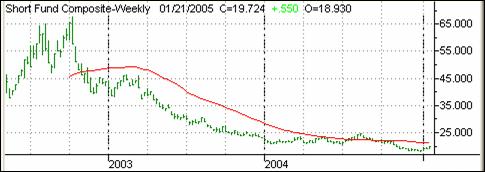
The above
indicator represents our Short Fund Composite (SFC) to be used as a trend
indicator for Bear When the
time comes we will carefully evaluate the fund choices, invest no more than
25% of our portfolios and follow a strict 7% stop loss rule. The SFC has
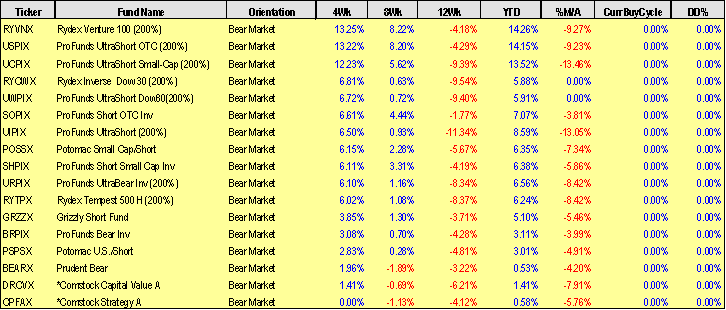
broken below its trend line by -7.31% and remains in negative territory. Below are
the most commonly available bear market funds and their momentum figures as
of
Please
note that some of the above funds try to outperform the index they are tied
to by the percentage stated. While this can enhance your returns it can
certainly accelerate your losses as well. Personally, I prefer the
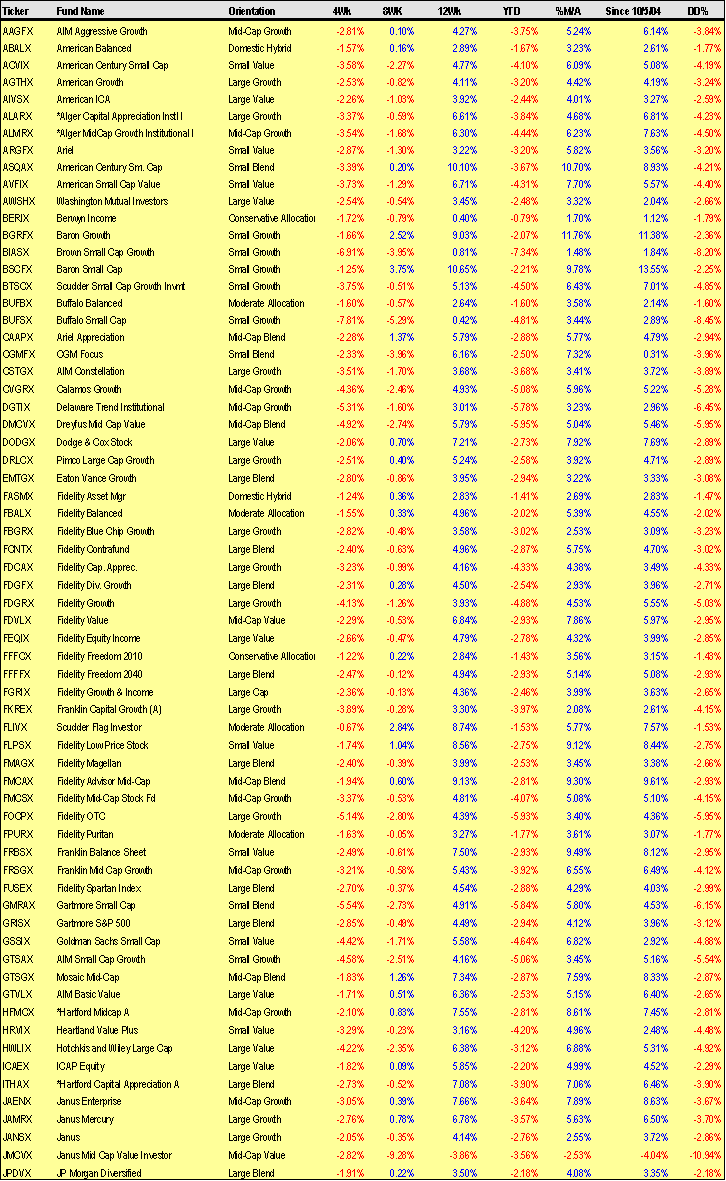
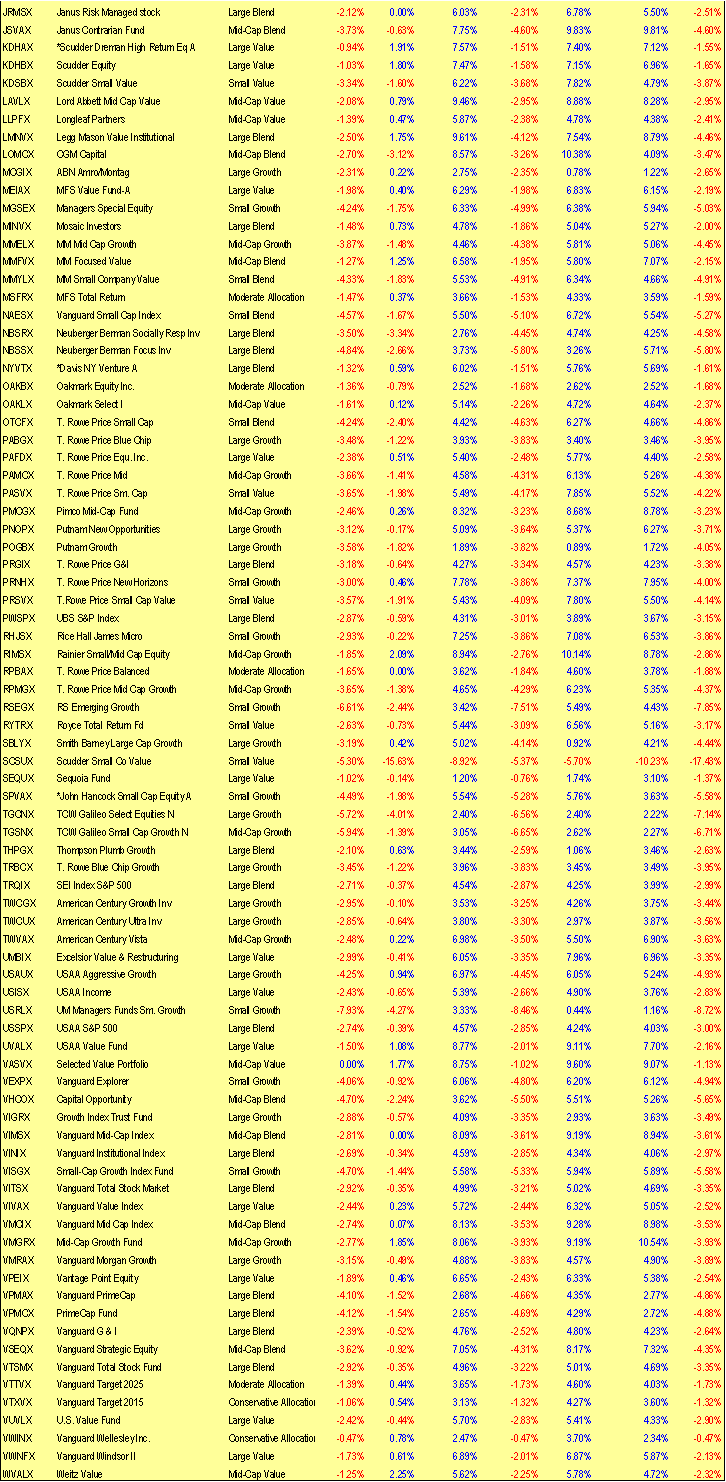
conservative route and, therefore, I will not use the leverage available. 6. 401(k) Funds: BUY — since Below is
a list of commonly held 401(k) domestic equity mutual funds showing their
latest momentum figures. Be aware,
however, that funds in your 401k plan generally are inferior to the choices
of funds which are available through most discount brokers. That’s not a put
down, but has been my experience over the years. However,
you can benefit greatly by at least not buying the worst fund at the wrong
time. If you follow our plan, you will never again buy one of those highly
volatile sector funds, when you really should be out of the market
altogether. Since
this list has grown quite a bit, I have sorted it now by Ticker Symbol in
alphabeti
7. New Subscriber Information To get you a head start on more
successful investing, please click on: http://www.successful-investment.com/newsletter/How_to_use.pdf and download our “How to use” information sheet and
last year’s “Buy Signal”
information: http://www.successful-investment.com/weekly/BuySignal042803.pdf If you
still need some guidance, feel free to contact me. Special Notes: 1. I have
taken great care in selecting only mutual funds with no loads and no
redemption fees. However, policies vary from one brokerage house to another.
Before placing any trade, make sure to verify with your broker or custodian
as to any charges and fees involved. 2. Be
aware that, because of the mutual fund scandals, some fund families have
added early redemption fees. While some are reasonable (30 days), others are
ridiculous by trying to tie up the individual investor for 180 days, or
you’re being charged a 2% fee to opt out early. Be sure to check first before
placing any order. 3. Should
there be a sudden change in investment positions, I will send out a special
e-mail bulletin immediately. 4. I will
limit the tracking of 401k funds to only the first 150 submitted to me. If you are
interested in having your portfolio professionally managed using our
methodology, feel free to contact me directly or visit our website http://www.successful-investment.com/money_management.htm
for more information. My e-mail
is ulli@successful-investment.com
and my phone is 714.841.5804 Until
next week. Ulli… ========================= Ulli G. Niemann Registered Investment Advisor 714.841.5804 =========================
DISCLAIMER (c) Copyright
Successful-Investment.com, 2003. All rights reserved. No portion of the above
message may be republished, retransmitted or forwarded without our express
written consent. Violation of this copyright may result in service
cancellation. Use and/or reliance on this service are strictly at the
subscriber's own risk. Subscriber must maintain compliance with our Terms and
Conditions. We will not be liable for the acts or omissions of any third
party with regards to delay or non-delivery of the 'Successful-Investment'
notification. We shall not be liable for incidental, indirect, special or
consequential damages or for lost profits, savings or revenues of any kind,
whether or not we have been advised of the possibility for such damages. Ulli G. Niemann is a registered investment
advisor pursuant to the California Department of Corporations. The
information presented herein is for informational purposes only and does not
constitute an offer to sell securities or investment advisory services. Such
an offer can only be made in those states we have established a
"notice-filing" status or where an exemption from notification is
currently available under the de minimis exemption rule. The investment advisor is an independent
advisor and receives no compensation from any corporations, brokerage houses,
organizations or special interest groups by making recommendations to
purchase any of the investment products used. The advisor is a fee-only
advisor and receives no commissions for client trades. |
||||